Introduction
The Diocese of Colombo is a hundred and eighty years old. Its story is not one of steady progress. It is, as the Diocese's own historians have put it, a story of success and of failure, of pride and of humiliation, of grandeur and of decline. It is our story to the world, and all are invited to learn it and, if inspired, to join in our mission of faith or, at least, to collaborate in our humanitarian and peace endeavours.
1796 to 1845
Before the Diocese
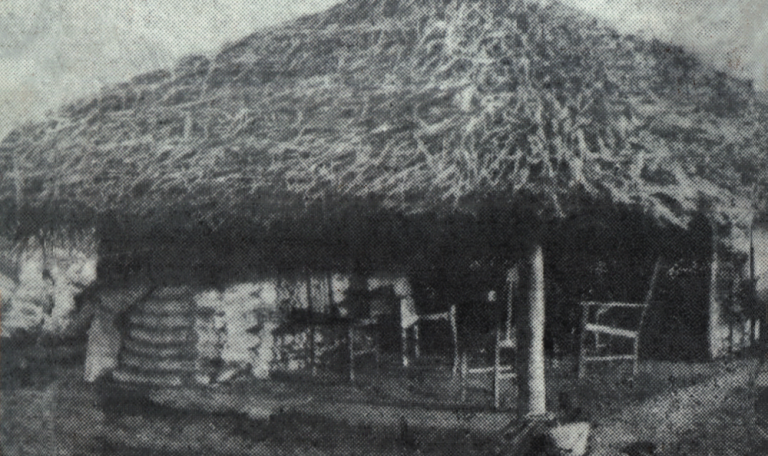
The British took the maritime provinces of Ceylon in 1796 and brought their church with them. The first Colonial Chaplain, the Revd James Cordiner, was appointed in 1799. Oversight came from the Bishop of London, and later from the Bishop of Calcutta, which meant in practice that Sri Lankan Anglicans mostly managed on their own. The Archdeaconry of Colombo was constituted by Letters Patent in 1818, with the Senior Colonial Chaplain as its first Archdeacon.
This early, pre-Diocesan church served the colonial garrison and administration. The first change came with the arrival of the missionary societies and the ordination of local men. The Church Missionary Society began work in 1820. The Book of Common Prayer was translated into Sinhala. In 1834 Samuel William Dias became the first son of the soil to be ordained in Ceylon itself, by Bishop Daniel Wilson of Calcutta during a pastoral visit. The Society for the Propagation of the Gospel followed in 1840 and established mission centres at Galle, Matara and Kalutara.
By the time a bishop was appointed, the foundations of something rather different from a colonial chaplaincy were already in place.
1845
The Founding of the Diocese
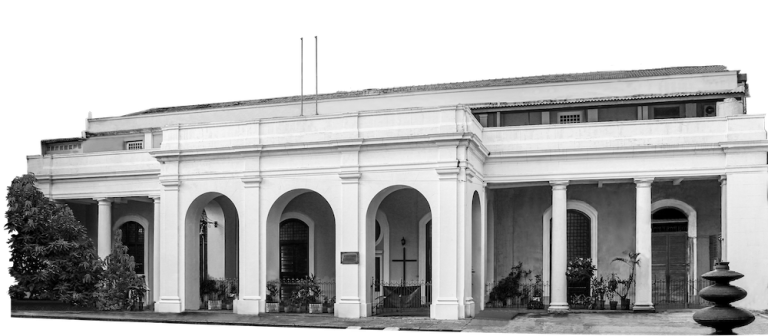
The Episcopal See and Bishopric of Colombo was constituted by Letters Patent under the Great Seal of England on 25 April 1845. Dr James Chapman was consecrated at Lambeth Palace Chapel on 4 May by the Archbishop of Canterbury, and arrived in Colombo on 7 November. He was installed at St Peter's Church, Fort, which served as the pro-cathedral.
He inherited a little over seven thousand Anglicans, a handful of colonial chaplains and an island. In fifteen years he founded chaplaincies for the plantation workers at Nuwara Eliya, conducted the first ordinations held in Ceylon, laid the foundation stone of the College of Saint Thomas the Apostle at Mutwal in 1849, and saw Christ Church, Mutwal, consecrated in 1854. He resigned in 1860 with his health gone.
The Diocese keeps 7 November as Diocesan Day, marking his arrival.
1862–1930
Building an Institution
The first Diocesan Synod including both clergy and laity met in 1867. The Ceylon Churchman, the Diocese's journal, began publication in 1871 and is still published today. Under Reginald Copleston, Bishop from 1875, and his brother Ernest, Bishop from 1903, the institutional life of the Diocese multiplied: schools, missionary societies, women's organisations and welfare bodies.
The Girls' Friendly Society and the Mothers' Union were founded in this period. The Church of England Zenana Missionary Society began work among women. The Sisters of the Society of St Margaret arrived in 1887 and started with children in Colombo. Their children's home at Moratuwa dates from 1922 and is still running.
In 1885 the Church of England in Ceylon was formally disestablished and the Diocesan Synod, later the Diocesan Council, was constituted. In 1930 the Diocese joined the new Province of India, Burma and Ceylon as the Church of Ceylon. Both were steps away from being an arm of the colonial state.
1930–1970
Becoming a Sri Lankan Church
Ceylon became independent on 4 February 1948. The church's own transition ran roughly in parallel and was not always faster.
In 1944 Bishop Cecil Horsley selected Lakdasa de Mel as his Assistant Bishop, the first Ceylonese person to hold Anglican episcopal office. The centenary of the Diocese was kept in 1945. In 1950 the Missionary Diocese of Kurunegala was inaugurated with Bishop Lakdasa de Mel as its first Bishop, dividing what had been a single diocese into the two that make up the Church of Ceylon today.
In 1955 Muriel Violet Hutchins of the Church Missionary Society founded Karuna Nilayam at Kilinochchi, which is still working seventy years later.
In 1961 the state nationalised the majority of church schools. For a diocese whose educational work had been central to its identity for over a century, this was a serious loss, and the effects of it are still visible in how the Diocese relates to the schools that bear its name.
1968 to 2009
A New Cathedral and the Years of War
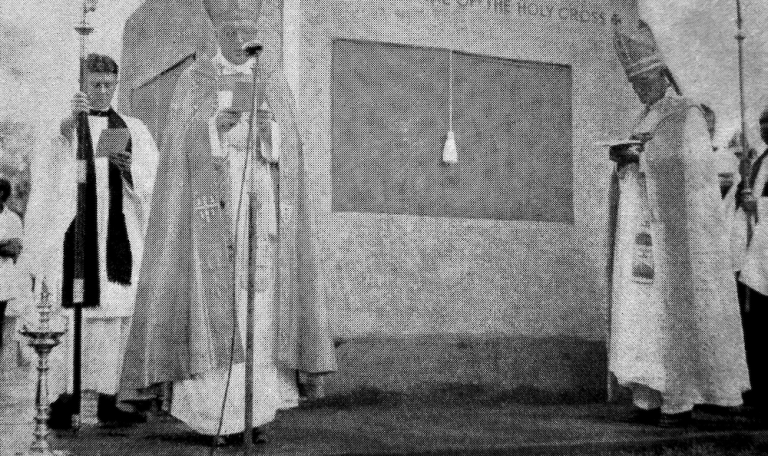
The foundation stone of the present Cathedral of Christ the Living Saviour was laid on 28 October 1968 under Bishop Harold de Soysa. It was consecrated on 7 November 1973, on the anniversary of Bishop Chapman's arrival.
Through the civil war, from 1983 to 2009, the Diocese's bishops and clergy spoke publicly for peace and reconciliation, which was not a comfortable position to hold. In 1987, in the middle of that war, Jabez Gnanapragasam was elected as the first Bishop of Colombo from the Tamil community. At a time of deep ethnic division in the country, the Diocese chose a Tamil bishop to lead its Sinhala, Tamil and English speaking congregations together.
When registration with government authorities was made a condition of doing relief work in the North, the Diocese refused to register as an aid agency, taking the position that Christian obligation to people in need does not depend on permission. It is one of the clearer things this Diocese has done and it should be recorded plainly.
The first women were ordained deacon in 2003. In 2006 three of them were ordained priest. The moment is commemorated by a mural in the Lady Chapel of the Cathedral, painted by Stanley Kirinde.
After the Indian Ocean tsunami of 26 December 2004, the Diocese set up a Relief and Rehabilitation Desk to coordinate its response along the coast.
2009 to the present
Rebuilding, Reconciliation and a New Bishop
After the end of the war the Diocese continued through the Vanni Task Force for Relief and Rehabilitation, working on reconstruction, resettlement and rehousing in Kilinochchi, Mullaitivu and Vavuniya. The Diocese's bishops made submissions to the Lessons Learnt and Reconciliation Commission.
In 2017 Oppuravillam at Vavuniya, the reconciliation centre founded by the late Revd Donald Jeyabalan Kanagaratnam, was re-consecrated. Karuna Nilayam at Kilinochchi continues to care for women with intellectual disabilities and elderly women without family, and to run the Muriel Pre-School on the same site.
The Diocese kept its 175th anniversary in 2020. In October of that year, under pandemic restrictions, Dushantha Lakshman Rodrigo was ordained and installed as the 16th Bishop of Colombo.